Introducing Superficial Radiotherapy (SRT) into your practice is an effective way to expand non-surgical treatment options. A successful launch demands a look at several core areas of your workflows and operations.
From patient experience and clinical throughput to reimbursement timelines and capital expenditures, evaluating the clinical value of SRT alongside its day-to-day workflow is essential to building a sustainable, high-performing program.
Why Superficial Radiotherapy (SRT)
For decades, dermatology has relied on Mohs surgery as the gold standard treatment option for non-melanoma skin cancer. Recent technological advancements, however, have brought Superficial Radiotherapy (SRT) to the forefront as a proven, non-surgical treatment option for basal cell and squamous cell carcinomas.
With cure rates comparable to Mohs surgery (around 98.9%), SRT provides clinicians an additional treatment option for patients who are poor surgical candidates. This includes elderly patients, individuals with comorbidities that complicate wound healing or anesthesia, and active patients seeking to avoid surgical downtime and scarring.
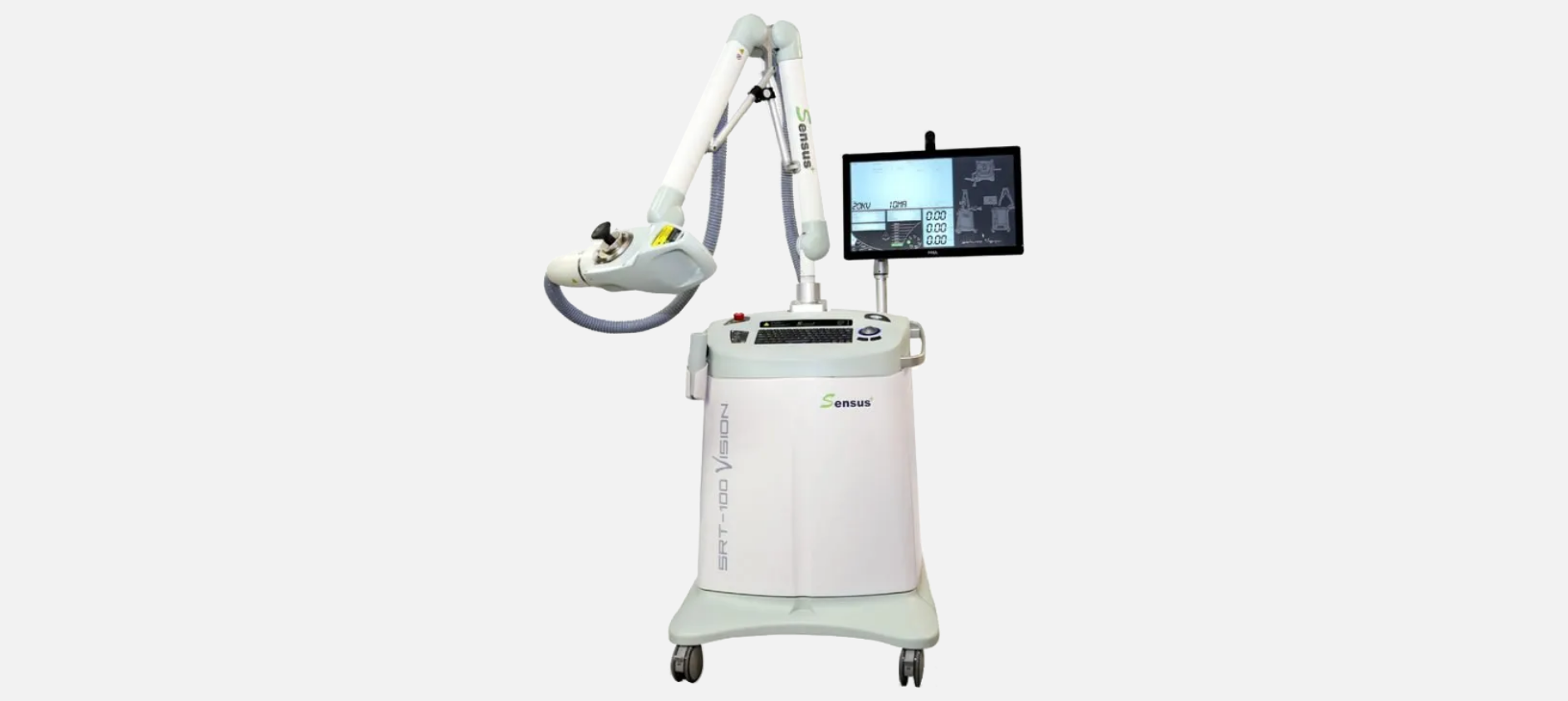
Delivered across a prescribed series of fractions, SRT directs calibrated, low-energy radiation to the site of the lesion. It operates with surgical precision. It delivers the radiation deep enough to get to the root of the skin cancer cells, yet shallow enough to preserve the healthy surrounding tissue and minimize cosmetic disruption.
For patients, this delivers a painless procedure with no cutting or scarring. They can walk out from a treatment session and return to their lives, whether it means going back to work, exercising or traveling.
For providers, SRT offers an additional treatment option to meet today’s patients where they are. With the ability to customize treatment plans, SRT offers a treatment solution that can enhance patient care and the overall experience without sacrificing clinical efficacy.
Is Your Practice a Fit for SRT?
With one in five Americans diagnosed with skin cancer by the age of 70, the clinical demand for treatment options continues to grow. Expanding your scope with a proven, FDA-cleared non-surgical option can help you serve more patients who may otherwise seek care elsewhere or decline surgical intervention.
To evaluate whether an SRT program aligns with your practice model, start by evaluating three operational benchmarks.
- What is your monthly non-melanoma skin cancer case volume? Assessing your baseline diagnosis rate of basal cell and squamous cell carcinomas can help determine if you have the patient density to financially support an SRT program.
- What is your current surgical referral rate? Together, Mohs and SRT can offer a treatment option for most patients. Pairing Mohs surgery with in-house SRT enables your practice to retain patients who previously required external radiation oncology or specialist referrals.
- Can your facility and clinical team support the workflow for SRT? Implementing an SRT program in your clinic requires evaluating your space and personnel. From identifying which space will house SRT and satisfy local shielding regulations, to staffing certified radiation therapists or trained clinical operators, there are some critical considerations to set your SRT program up for success.
Understanding your patient volume, referral leakage, and physical infrastructure ensures that integration SRT into your practice today is clinically viable and an asset that scales alongside your long-term practice goals.
Buy, Lease or Finance: Obtaining the Equipment
The clinical case for SRT often becomes clear before practice owners know how they will obtain the equipment. To accommodate diverse financial requirements, Sensus Healthcare provides several flexible acquisition pathways to align with varying capital resources, patient volumes, and risk tolerances.
Direct Capital Purchase
For practices that have available capital and confidence in sustained volume, purchase serves as the best option. Ownership offers depreciation benefits and the lowest long-run cost over time.
Leasing & Structured Financing
Sensus Healthcare offers leasing and financing options for practices that would prefer to make a monthly payment for the SRT equipment. For most practices, this often aligns best.
Fair Deal Agreement
Sensus Healthcare also offers a Fair Deal Agreement, which offers dermatologists and other practitioners revenue alignment and capital preservation. In doing so, it eliminates the barrier to entry for some practice leaders.
By aligning the acquisition model to your clinic’s cash-flow profile and patient pipeline, bringing SRT in-house becomes a strategically measured operational expansion.
Billing and Reimbursement for SRT Factions
In 2026, the Centers for Medicare & Medicaid Services (CMS) published a distinct set of codes specific to the use of SRT from Sensus Healthcare. In doing so, it acknowledged SRT as a standalone treatment modality for non-melanoma skin cancers.
These updated codes improved procedural economics, more than tripling the per-fraction reimbursement rate compared to prior fee schedules. This adjustment removes historical margin constraints, creating strong economic feasibility alongside proven clinical efficacy.
Beyond practice balance sheets, the coding updates eliminate barriers to care. Clear, standardized billing adopted across CMS and major commercial payers mean that patients have reliable insurance coverage for a non-surgical alternative. It empower patients to choose SRT as a treatment protocol, without having to navigate complex prior authorization workflows with their insurance.
For clinical leaders, integrating SRT from Sensus Healthcare into their practice represents a positive evolution that impacts every corner of their practice. By aligning clinical workflows and patient satisfaction with the financial predictability of the code changes for SRT from Sensus Healthcare, modern practices can thrive operationally while setting a new, comprehensive standard of patient-centered care.
The Patient Experience
More than one in three patients diagnosed with non-melanoma skin cancer note that the diagnosis feels traumatic, according to recent research. For many, that burden stems less from the diagnosis and more with surgery – and more specifically, anxiety with needles, surgical excision, prolonged open wound care, and permanent cosmetic scarring.
For patients selecting SRT for their treatment option, the care journey includes SRT treatments right in the dermatology office. Lasting just a few minutes, sessions are quick – and many compare it to getting an X-ray at the dentist. From there, patients can walk out the door and return to their active lifestyles or to work, with no required downtime.
While there’s no recovery time for SRT, patients do have to undergo a series of treatment. Their specific case of non-melanoma skin cancer will determine how many sessions are required to treat their skin cancer.
Staffing and Workflow
Seamlessly integrating SRT into your practice requires insight into how it will align with your existing patient workflows, as well as your patient team.
The Clinician
The treating clinician works with the patient to develop a treatment protocol. For most practices, this is a dermatologist or a mid-level provider. They make the clinical decision and manage the overall patient relationship. While the time commitment for the clinician is small per session, it’s important to take it into consideration when scheduling the appointments.
Clinical Support
Depending on state-specific radiation control regulations, the clinical support can be staffed by a licensed radiation therapist or a trained clinical operator under direct physician supervision. This person will prep the patient, operate the equipment, and document the session. The clinician is there for the decision and overview, while the clinical support person administers the treatment and handles the session.
Front Office
Like other patients in the clinic, the front office schedules across the treatment series and ensures that the calendar for the patient, the clinician, and the clinical support person can adhere to what’s required.
Billing & Coding
The documentation and claim submission for each treatment goes through billing and coding, similar to other treatments in the clinic. With the new code changes for 2026, this becomes even more important to ensure that reimbursements happen.
Lastly, high-volume dermatology clinics may also have one person in charge of the overall program. In this role, they provide oversight to:
- Confirming the week’s treatment appointments
- Checking that documentation is complete prior to submission
- Tracking patients who missed a session
- Reporting and documentation on volume and revenue
Understanding what’s required for staffing an SRT program can ensure your clinical team transitions smoothly from training to treating patients on day one.
Marketing SRT to Patients
Because most patients tie non-melanoma skin cancer treatment to the scalpel, patient education serves as the foundation to building a successful SRT program. Ensuring patients understand that SRT is a proven, non-surgical alternative can build trust, and empower anxious patients to take proactive control of their skin health.
An effective patient outreach strategy combines digital awareness with in-clinic educational touchpoints. This may include:
- Building content and procedure-specific content on your website to address patient concerns
- Placing educational brochures and signage within the clinic to spark conversations and questions
- Featuring non-surgical treatment options on digital profiles, including social media and your Google Business Profile
- Focusing on including information about SRT in ongoing patient communications via email marketing, social media, and direct mail
To provide additional support, Sensus Healthcare provides marketing resources, collateral, and toolkits to support patient education.
Next Steps: Building Your SRT Program
Integrating Superficial Radiotherapy from Sensus Healthcare doesn’t require first solving every operational component. However, understanding how to align clinical demand, facility readiness, and revenue cycle planning can set your program up for success, before the first patient even sits in your chair.
The Sensus Healthcare team partners with dermatology practices at every milestone of the journey, from initial clinical volume modeling to staff training and patient outreach.
If you’re ready to evaluate when an in-house SRT from Sensus Healthcare is the right strategic fit for your practice, schedule a consultation with the Sensus Healthcare clinical solutions team.