
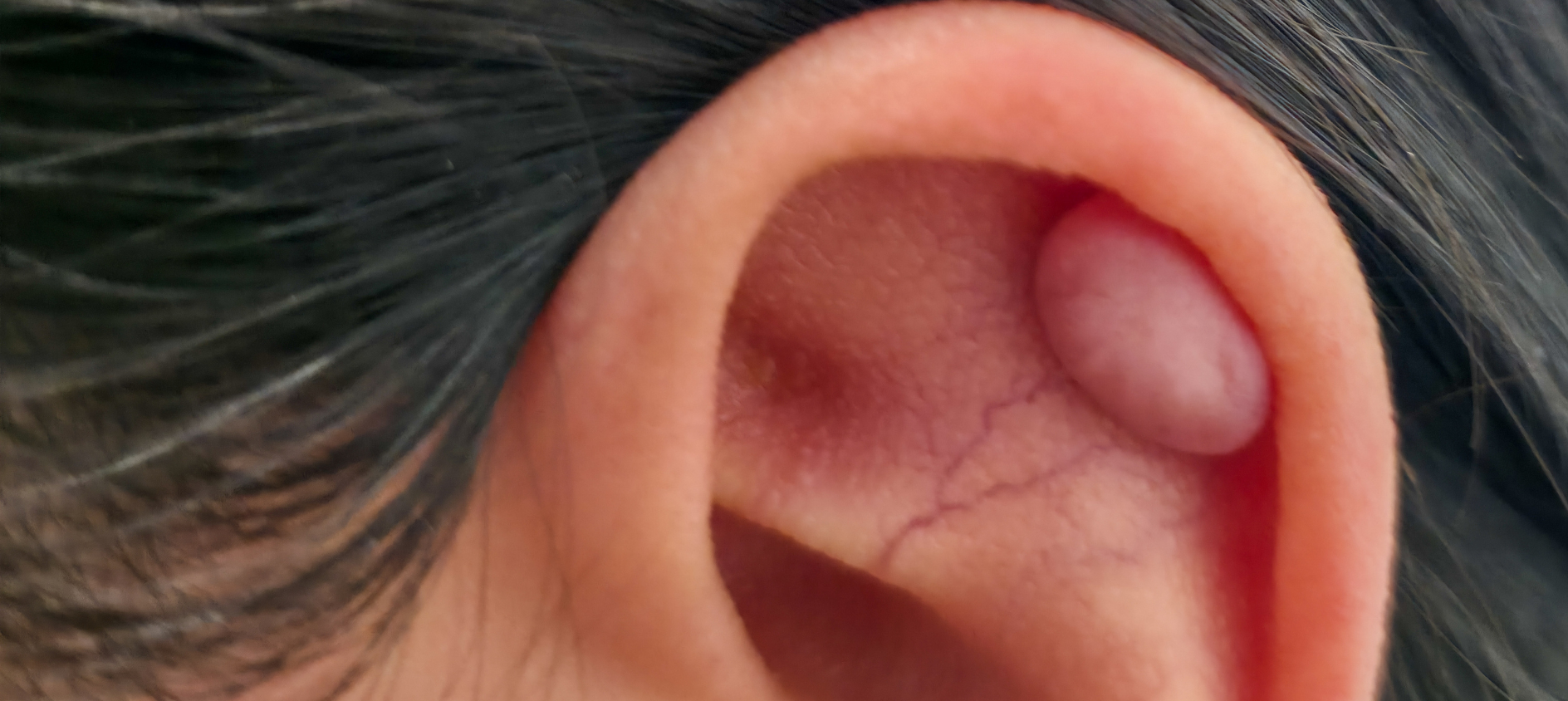
For the 10 percent of the population that suffers from keloids, finding an effective treatment option can often feel like a challenge.
Traditional treatment options are limited in truly removing a keloid and keeping the keloid from forming again.
Dr. Posten, board-certified dermatologist and Mohs surgeon at Advanced Dermatology Associates, frequently works with patients who have keloids and finds that treatment can often be a long process for patients.
“Typically, I’ll see a keloids patient who is seeking an alternative treatment option,” said Dr. Posten. “Maybe they have been treated in the past, and it’s been unsuccessful. Often times, they come to my practice because they are looking for a solution that will keep the keloids from coming back.”
Keloids occur where there has been injury to the skin, which could range from a surgical scar to a piercing to even a bug bite. When the skin gets injured, the body then produces collagen. Keloids grow when there’s too much collagen production, resulting in a raised scar – which can grow quite large and extend from the original injury site.
For patients with keloid disease, keloids are most likely to grow while they are in their 20s or even 30s. Because of limited awareness about treatment options – and limited access – many patients live with keloids for a long time before seeking treatment.
“In many cases, the keloid has been bothering them for several years,” said Dr. Posten. “They may have just learned about treatment options or the keloids – which I see most often on their ears, chest, or back – have become too difficult to manage.”
Keloids can present anywhere there has been an injury to the skin on the body. In addition to the ears, chest, and back; keloids also commonly grow on shoulders. No matter where keloids may be located on the body, they are usually easy to see and hard to cover. This can be challenging for patients to manage mentally, but also cause some issues for everyday life.
“It’s more than just fixing the cosmetic appearance of keloids – they can also be itchy or painful, depending on where they appear on the skin,” continued Dr. Posten. “Because of this, keloids may impact how patients are able to work. They can negatively impact both their personal and work lives.”
Keloids Treatment Options
As medical dermatology has evolved over the years, so have the options for treating keloids. In looking at how they are typically treated, Dr. Posten notes that there are three common keloids treatment paths.
Steroid injections are often the first course of treatment for keloids. These injections can help bring down the inflammation, which lives at the base of the keloid. It will help to improve the shape and texture of the keloid, but likely doesn’t shrink them to a point where they are nearly gone.
“With steroid injections, you see about a five percent efficacy rate,” said Dr. Posten. “Even after multiple injections, the steroid may only soften and improve the keloid slightly.
Surgery is often the next best option for treating keloids. However, because surgery adds more trauma to an area that has high inflammation, the success rates can vary.
“Since keloids grow due to trauma on the skin, it is possible for them to come back after surgery,” said Dr. Posten. “Often times, they will grow back even bigger than they were in the first place.”
In fact, studies show a 70% reoccurrence rate for keloids when using surgical techniques alone for the removal of keloids.
Dr. Posten has witnessed that the combination of surgery and Superficial Radiotherapy (SRT) treatment delivers the best results for keloids treatment.
“When you do surgery, and follow it with a protocol for SRT treatment, you find that the success rates are much higher than surgery alone,” said Dr. Posten. “It will work about 90% of the time, because SRT will remove any inflammation at the base of the keloid – which typically causes the keloid to grow.”
Advanced Superficial Radiotherapy (SRT) Technology for Keloids Treatment
Adding Superficial Radiotherapy (SRT) technology as a follow-on treatment to surgery can provide immense benefits for patients. SRT works by delivering low-energy X-rays to a precise or targeted area of the skin. It is a non-invasive treatment option for non-melanoma skin cancers and keloids.
Because SRT technology delivers radiation to the site of the abnormal cells, it damages the DNA of those cells – without impacting the surrounding healthy skin cells. In the case of keloids, the SRT treatment helps to reduce the inflammation at the site of skin injury. This inflammation leads to excess collagen production, and results in the keloids growth at the location of the scar or skin injury.
“After the surgery, we do SRT treatments on the days immediately following,” explained Dr. Posten. “These treatments take place right in the dermatology office and are quick. I usually tell patients that the process to getting an SRT treatment to treat keloids is like to get an x-ray at the dentist.”
Dr. Posten has found that following a strict protocol of SRT treatments immediately following the surgical removal of the keloid helps to increase cure rates, meaning that the keloid is less likely to grow back at that location.
In recent medical studies, SRT technology has been demonstrated to achieve cure rates as high as 90% for keloids patients when combined with surgery.
The Future of Keloids Treatment
While there’s still room for a better understanding of why some people get keloids, advances in treatment options offer patients more options to treat keloid disease. SRT technology provides a painless and non-invasive option to help patients after surgical removal of their keloids to significantly reduce the chance of recurrence.
For many patients, SRT as a treatment option has finally given them relief from the disease.
In Dr. Posten’s practice in Dallas, he has had the opportunity to help numerous patients with their keloids. From removing multiple keloids on the shoulder and back for one patient, to removing a coconut-sized keloid on the back for another, Dr. Posten enjoys helping people recover from keloids and get their quality of life back.
“I get really excited about the option to use SRT to treat keloids today,” said Dr. Posten. “It’s a treatment option that’s easy for doctors and patients, and it has very successful results.”
Learn more about Sensus Healthcare’s SRT technology for keloids treatment.