While surgical excision and Mohs surgery will continue to be foundational treatment options for patients with non-melanoma skin cancer (NMSC) and keloids, clinical innovation is actively expanding the modern dermatologist’s therapeutic options.
Advanced modalities like Superficial Radiotherapy (SRT) from Sensus Healthcare seamlessly integrate into surgical practices, adding a clinically proven, FDA-cleared alternative to the traditional procedural toolkit.
Integrating a non-invasive treatment pathway like SRT elevates the patient experience without compromising outcomes. By broadening treatment options, practices not only enhance the standard of care but also strengthen their operational flexibility and long-term financial health.
Elevating Patient-Centric Care by Expanding Treatment Options
With one in five Americans diagnosed with skin cancer by age 70, the rising volume of non-melanoma skin cancer cases brings a corresponding increase in complex clinical scenarios.
While surgery remains standard, routine clinical factors often elevate surgical risk or complicate outcomes for surgical procedures. Tumor location, patient health and comorbidities, and individual preferences can determine whether an alternative or non-surgical treatment option may be warranted.
Basal cell carcinoma (BCC) and squamous cell carcinoma (SCC) frequently target central facial zones, such as the “H-zone” – with cancerous lesion growths common on the tip of the nose, eyelids, and ears. In these cosmetically, and functionally, sensitive areas, obtaining clear margins via surgical excision or Mohs surgery can be challenging. Closure may demand tissue rearrangement, skin grafting, or secondary reconstructive surgery.
In addition to facial lesions, the pretibial region and lower extremities can present surgical challenges as well. Removing cancerous lesions in these areas, particularly among older adults, often leads to compromised or prolonged wound healing. Alongside the facial H-zone, chronic lower-extremity wounds can be some of the most frustrating procedural presentations in modern dermatologic surgery.
As patient populations age, prevalent comorbidities like diabetes, peripheral vascular disease, and chronic anticoagulant or antiplatelet therapy significantly increase the risk of intraoperative bleeding, compromised wound healing, and surgical site infections.
Beyond physical contraindications, other patient factors may be critical to assess when establishing the treatment pathway for a patient. Significant needle or procedural anxiety, as well as concerns over scarring, can indicate that a non-invasive treatment option may be more suitable. In addition, some patients are unable to accommodate prolonged downtime to recover from surgery. Wound care requirements may also lead patients to non-surgical treatment options for non-melanoma skin cancer.
For patients who are managing keloids, multi-modal strategies have demonstrated the most success in helping to mitigate recurrence over time. Surgical excision alone has high recurrence rates, with the keloid often coming back bigger than it was prior to the removal. Following a protocol where the keloid is surgically removed, and the site is treated with a SRT protocol, can drastically reduce recurrence rates. Recent clinical data demonstrates that surgical removal followed by SRT treatment can result in a 90% cure rate for keloids.
Surgery and SRT in Harmony: A Clinical Complement
Surgical excision, Mohs micrographic surgery, and Superficial Radiation Therapy (SRT) are not competing treatment options. They are tools that can offer comprehensive treatment options within a dermatologic practice. Not all patients will be a candidate for surgically removing a cancerous lesion. And, not all patients will be a candidate for curing their non-melanoma cancer via SRT treatments.
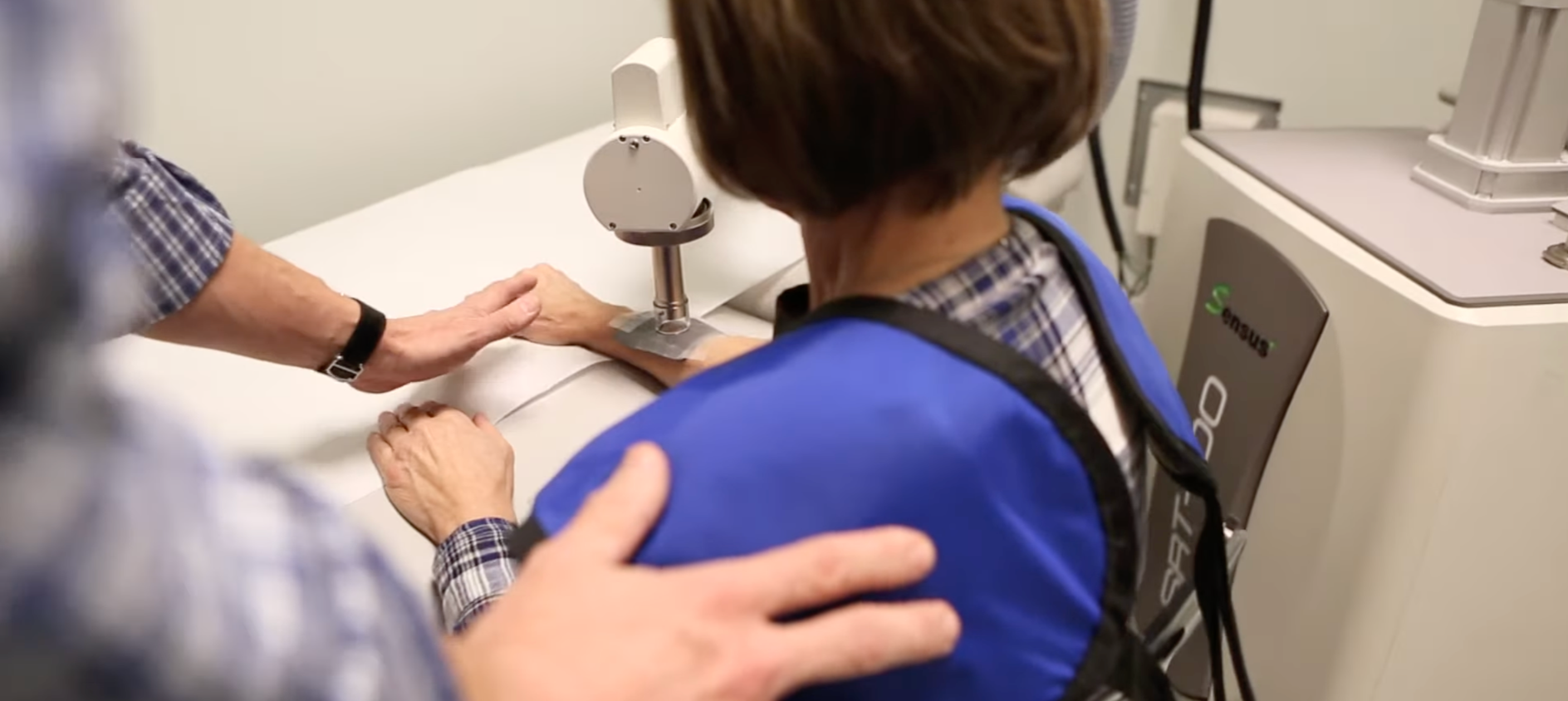
SRT from Sensus Healthcare uses precise, low-energy photon radiotherapy targeted strictly to the epidermal and dermal depths. Delivered across several sessions, the radiation damages malignant cells, while normal adjacent tissue repairs between fractions to maintain structural integrity. The cure rate for SRT as a non-invasive treatment option for non-melanoma skin cancers like basal and squamous cell carcinomas exceeds 98 percent. This rivals the efficacy of traditional Mohs surgery, all without the scalpel.
For patients, a non-surgical treatment option like SRT eliminates the physical trauma of surgery and complex reconstruction. It offers an alternative for individuals concerned about cosmetic outcomes, especially in cosmetically sensitive areas. It can be an essential treatment option for geriatric or medically fragile patients who cannot safely tolerate anesthesia, surgical excision, or ongoing wound management.
Integrating SRT directly into the dermatology practice can expand the clinician’s scope of therapies while keeping high-risk patients in house. Rather than referring medically complex patients out, dermatologists can maintain complete medical oversight from initial biopsy through final follow up.
In 2026, updated CMS coding structures established dedicated reimbursement pathways specifically supporting SRT delivery and clinical planning in outpatient settings. These clear coding guidelines and established reimbursement structures provide operational predictability, making in-office SRT both clinically sound and economically sustainable for modern surgical practices.
Precision Through Image Guidance: The Diagnostic Advantage
A common consideration for Mohs surgeons transitioning to SRT centers on margin verification. Without immediate histology, how does a clinician assess tumor depth and resolution?
Modern SRT answers this through high-resolution ultrasound. By integrating ultrasound guidance directly into the treatment protocol, clinicians visualize the precise depth, lateral margins, and architecture of the lesion prior to initiating treatment via SRT. The treatment protocol is validated via a medical physicist or a radiation oncologist, all of which is coordinated via Sensus Cloud as part of the SRT.
Throughout the treatment delivery, serial imaging allows the provider to track tumor regression in real time, confirming target response and evaluating post-treatment tissue resolution. This diagnostic clarity bridges the gap between surgical margin control and non-invasive SRT treatments – equipping dermatologic surgeons with objective, visual confirmation of tumor destruction while preserving vital healthy tissue.
From non-melanoma skin cancer to recurrent keloids, integrating SRT into the practitioner’s treatment toolkit ensures providers can tailor care to each patient’s distinct medical needs, cosmetic preferences, and lifestyle priorities. In doing so, practices elevate the standard of care – delivering exceptional outcomes while fostering a patient-centered clinical experience.
Whether you’re seeking to expand clinical options for non-surgical candidates, elevate your keloid cure rates or future-proof your practice’s offerings, join us where expertise meets innovation. Contact our sales team to learn more about integrating SRT from Sensus Healthcare into your practice.