Basal cell carcinoma (BCC) represents most of the estimated 5+ million non-melanoma skin cancer (NMSC) cases diagnosed annually in the United States. While surgical excision and Mohs micrographic surgery have long served as primary interventions, the industry continues to shift, given the evolving demographics and advanced technologies within dermatology.
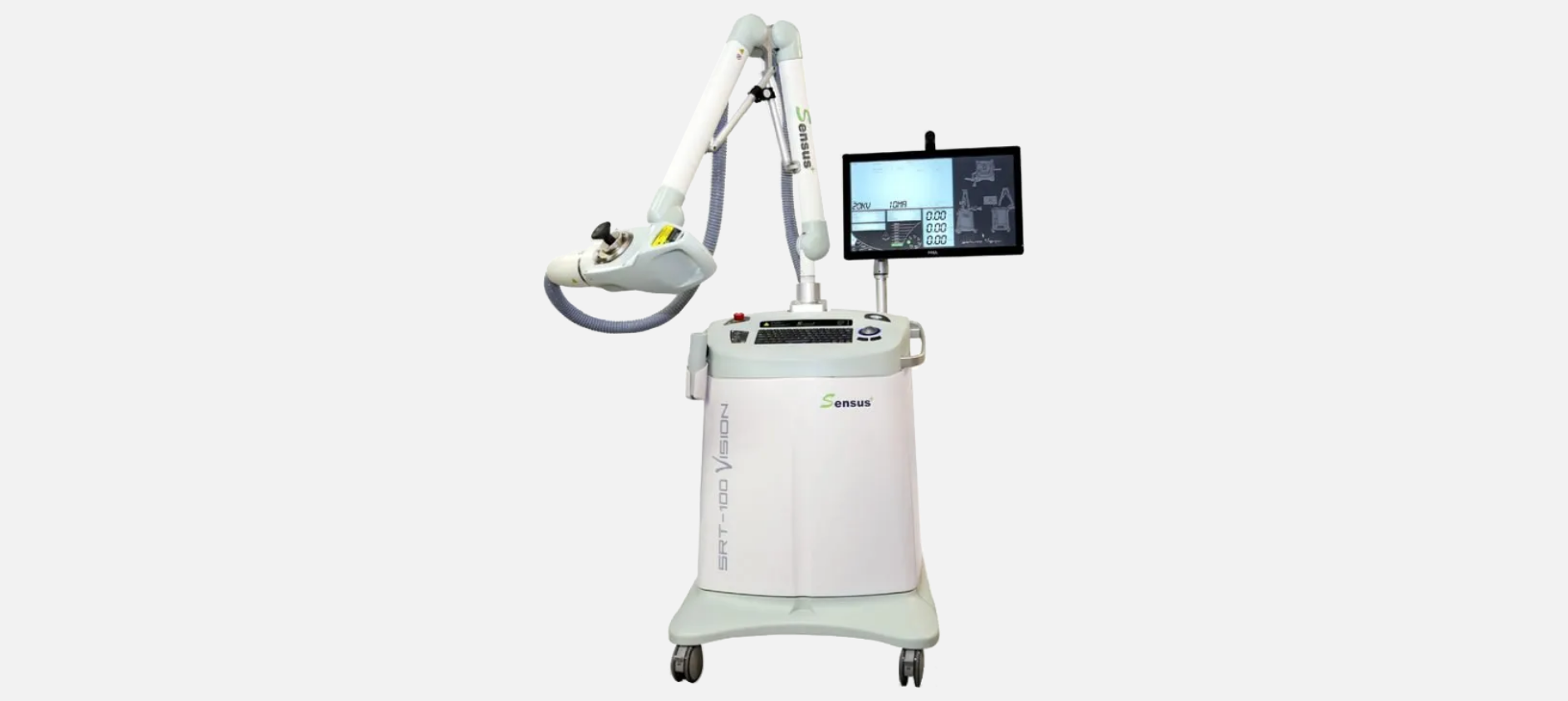
These shifts require modern dermatology practices to offer several treatment options, including non-invasive modalities like Superficial Radiotherapy (SRT) from Sensus Healthcare.
For patients who may be considered high risk for surgery, or have a lesion in a cosmetically sensitive or anatomically challenging area, a non-invasive treatment option like SRT matches surgical cure rates without any cutting, stitches, or scarring.
The Clinical and Operational Limitations of Primary Surgical Resection
While Mohs micrographic surgery and standard surgical excision remain foundational interventions for non-melanoma skin cancer (NMSC), routine scalpel-based procedures introduce persistent clinical bottlenecks and post-operative complications across specific patient cohorts and anatomical sites.
Every dermatologist’s waiting room demonstrates the aging population that continues to face increasing diagnoses of non-melanoma skin cancers. Many of these patients are managing diabetes, heart conditions, or are taking daily blood thinners. Surgical removal of non-melanoma skin cancer for these patients can bring about immediate complications, which makes them poor candidates for surgical excision or Mohs micrographic surgery. Non-invasive options like SRT offer an effective treatment option without forcing a patient into surgery.
Lesions presenting in cosmetically and structurally sensitive areas – specifically the central facial H-zone (nose, eyelids, lips), scalp, and hands – frequently require complex layered closures, advancement flaps, or full-thickness skin grafts. Despite advanced surgical technique, these areas are highly sensitive and can lead to visible scarring after surgical removal of basal cell carcinoma. This can present as patient anxiety or cosmetic dissatisfaction.
Where a lesion appears matters just as much as its size. Surgically removing basal and squamous cell carcinomas on the lower legs or shins becomes difficult because there’s less circulation. The skin tends to be more taut in these areas. Surgical incisions don’t often close cleanly, which can create a slow and frustrating healing process for patients. In some cases, this can lead to chronic wound issues or infections that require ongoing wound care for patients.
Ongoing care for patients dealing with reconstruction and wound care issues serves as important patient care protocols, but it can be time consuming for dermatology offices. For patients, it can also be challenging because the healing process removes them from everyday life. This could result in missed work, exercise restrictions, or learning how to take care of a surgical wound at home.
Surgery will always have its place in dermatology, but it doesn’t have to be the only tool on the tray. Offering non-invasive Superficial Radiation Therapy (SRT) gives practices a practical way to solve these tough anatomical, medical, and lifestyle hurdles—all while delivering the high cure rates patients expect.
Superficial Radiotherapy (SRT) as a Treatment for Basal Cell Carcinoma
As the most common form of non-melanoma skin cancer, basal cell carcinoma accounts for approximately 80 percent of NMSC cases. For decades, surgery was considered the only definitive way to treat these lesions and cure basal cell carcinomas. Today, SRT from Sensus Healthcare offers a proven, non-invasive treatment alternative that treats the cancer without the physical trauma of excision.
SRT uses precise, low-energy X-rays (typically 50-100 kV) delivered directly to the site of the cancerous lesion. The targeted treatment concentrates on the exact dermal layers where basal cell carcinoma presents. By delivering radiation in factions over a series of treatments, cancer cells are eradicated while normal tissue has time to regenerate between sessions.
Published clinical studies show that SRT delivers a cure rate exceeding 98% for basal cell carcinoma – directly matching the reported efficacy of Mohs surgery.
Because the skin remains intact, patients heal with no surgical scarring. Treatment via SRT is fast and completely painless:
- No needles or scalpels as sessions require zero local anesthesia
- Minutes in the chair, as radiation delivery is 30-90 seconds (many patients compare the experience to getting a routine X-ray at the dentist)
- Immediate return to daily life, as patients can walk out their door and get back to their routine with no restrictions on work or exercise
By providing comparable cure rates without surgery, SRT gives dermatology practices an essential, non-invasive standard of care that meets both clinical goals and patient expectations.
The Role of SRT Beyond Basal Cell Carcinoma
While basal cell carcinoma represents the majority of NMSC patient volume, SRT can be effective in treating a broader clinical spectrum. In addition to BCC, SRT demonstrates an equivalent cure rate for primary cutaneous squamous cell carcinomas, providing an identical non-invasive treatment pathway for patients. For patients that have similar considerations as those with BCC, SRT becomes a proven modality of choice to cure cancerous lesions at a similar rate to Mohs micrographic surgery.
In addition, SRT serves as the gold standard treatment option for keloids. Keloids present an enduring challenge for surgical excision, where it can result in recurrence rates as high as 40-100%. When SRT is administered immediately following surgical excision, clinical studies document a cure rate exceeding 90%.
Integrating SRT into Modern Outpatient Workflows
The Sensus Healthcare SRT seamlessly integrates into outpatient dermatology suites, private surgical practices, and radiation oncology departments within healthcare systems.
Recent CMS coding updates and fee schedule adjustments for SRT have significantly reinforced the financial viability of the treatment option. These updates have resulted in substantial reimbursement increases that allow practices to invest in advanced technology while expanding their standard of care.
Lastly, dermatologic oncology continues to evolve given patient preferences and technological advances thanks to innovation in the industry. Because of this, dermatology continues to move from single-modality protocols to tailored patient pathways that support patients’ treatment preferences and lifestyle requirements.
Offering SRT does not replace surgical excellence, it enhances it. By pairing traditional Mohs excision for patients with NMSC lesions that are ideal for surgical removal with SRT for more complex, high-risk, or cosmetically sensitive sites, practices can ensure that every patient receives the treatment that aligns with their unique case.
Ready to evaluate SRT for your practice? Discover how the SRT can integrate into your clinical suite and assess customized practice economic models by connecting with the Sensus Healthcare team today.