
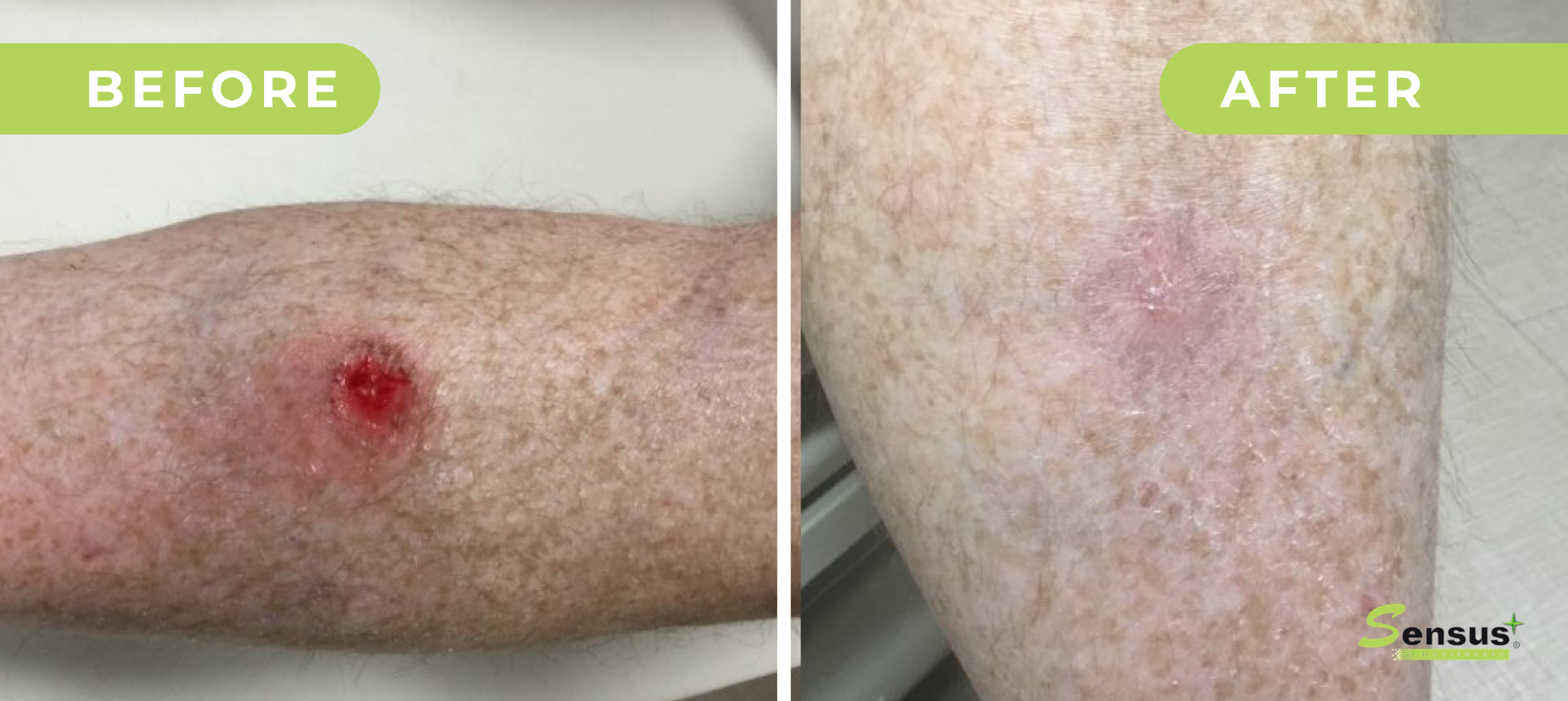
At-home skin checks tend to focus on key areas of the body that get the most sun – your face, neck, ear, and scalp. However, the lower extremities – specifically shins, calves, and knees – are common places for skin cancer to develop. These areas should be prioritizes in skin checks.
In fact, legs are the third most common place on the body for squamous cell carcinoma – a type of non-melanoma skin cancer – to occur. Legs can be unprotected by sunscreen in the summer, which can increase the risk of skin cancer to develop. In the winter, they may be covered by pants. Suspicious spots may be missed, until the cancer progresses, because of the location on the body.
Paying attention to the signs and symptoms of skin cancer on legs starts with understanding what types of skin cancers appear on the legs, as well as what to do if you find a lesion or spot.
The 3 Common Forms of Skin Cancer on the Legs
All skin cancers can form on the legs. Skin cancer can form on areas of the body that don’t get a lot of sun exposure, like the legs.
Melanoma
Of all skin cancers, melanoma is the most aggressive. It tends to grow the fastest. Statistically, the most common site for melanoma in women is on the leg. It often begins as a new dark spot, or a rapidly changing, irregular mole on the calf or thigh.
Basal Cell Carcinoma
Basal cell carcinoma, which is the most prevalent type of skin cancer, can appear anywhere on the leg. However, it often presents on the shins or calves. Basal cell carcinoma – which is frequently called BCC – can appear as a pearl bump that may be shiny or pearly. It may even be a patch of skin that looks irritated, even though no physical irritation has occurred.
Squamous Cell Carcinoma
Squamous cell carcinoma – or SCC – typically appears in areas where there has been cumulative sun exposure over time. However, skin cancer can appear anywhere.
SCC presents on the thigh or knee. SCC looks like a rough, scaly sore. It could also be a crusted patch of skin, or a nodule that looks like a wart. It may bleed when irritated.
Identifying the Signs and Symptoms of Skin Cancer on Legs
In the summer, legs can frequently have scratches, bruises, and bug bites. Wearing shorts and spending more time outdoors means that they go through the wringer.
To identify the signs and symptoms of skin cancer on legs, there are a few cardinal signs to pay attention to understand if it could be skin cancer on the leg. As always, it’s important to contact your dermatologist if you have any concerns about your skin to get a professional opinion.
If the sore doesn’t heal, it could be a sign of skin cancer on the leg. For instance, if there is a bleeding spot on the shin or calf, it’s important to pay attention to how it heals. A scratch or shaving nick will recover in a matter of days. However, if it’s a skin cancer lesion, it may scab over, flake off, and bleed again without truly closing.
Evaluating moles, lesions, and other spots on your skin for changes can also be helpful to identify whether its skin cancer. The classic ABCDE guide can help to identify any issues that should be flagged to your dermatologist:
- A: Asymmetry. Are both sides of the mole equal? Or is one side bigger than the other? This could be a cancerous spot that should be addressed with your dermatologist.
- B: Borders. Are the borders uneven, ragged, or unclear? These types of borders are typically present in skin cancers.
- C: Colors. Has the color changed? Does the mole have multiple color variations within it? This could be an indication of skin cancer.
- D: Diameter. Is it larger than the size of a pencil eraser? While skin cancer lesions can be smaller than this, this could be an indication of skin cancer.
- E: Evolving. Have you noticed changes to the mole or that area of the skin? Changes could indicate skin cancer and should be addressed with your dermatologist.
Lastly, pay attention to the texture of your skin on your leg. Is there a patch of dry or scaly skin? Does it feel rough to the touch and doesn’t respond to lotion or other moisturizer? This type of condition could signal skin cancer and should be evaluated by your dermatologist.
Why Skin Cancer on the Leg Presents Unique Surgical Concerns
The standard method of treating non-melanoma skin cancer includes Mohs surgery, which is a surgical procedure that removes layers of the skin until the cancerous cells are removed.
Surgical excision for skin cancer on the leg can be challenging. Generally, skin covering the knees and shins is tighter than other areas of the body. Closing the excision after removing the skin cancer lesion can be challenging.
In addition, the lower extremities like the legs have lower circulation – which can lead to surgical wound complications. This may require additional reconstruction to ensure recovery, and slow healing times as well.
The scarring from surgery may result in a cosmetic impact, like surgical scars or skin discoloration. This can cause ongoing distress for patients, even with reconstructive surgical procedures to help minimize scarring.
Curing Skin Cancer on the Leg Without the Scalpel
Innovations in dermatological care have expanded treatment options for patients who may have non-melanoma skin cancer on the leg. This means that they may not have to undergo surgery to cure their skin cancer.
Superficial Radiotherapy (SRT) from Sensus Healthcare offers a non-invasive treatment option that treats non-melanoma skin cancer lesions with low-energy radiation to the surface layers of the skin. The treatment targets the cancerous cells, disrupting the DNA and destroying the malignant cells. The healthy, normal skin around the cancerous cells repairs itself.
SRT does not require cutting or stitches. Because it is non-surgical, there’s no scarring. It has a similar cure rate to Mohs surgery with a 98.9% cure rate. For many patients, this may be the treatment option of choice for skin cancer on the leg. It removes the challenges with the tight skin, lower circulation, and cosmetic impact of surgical procedures.
If you are experiencing signs and symptoms of skin cancer on legs, it’s important to talk to your dermatologist and schedule an annual exam. If you are diagnosed with non-melanoma skin cancer, know that there are non-surgical treatment options to remove the lesion without impacting your daily life.
Looking for a dermatologist that offers SRT treatment options from Sensus Healthcare? Check out the Sensus Healthcare Location Finder.