
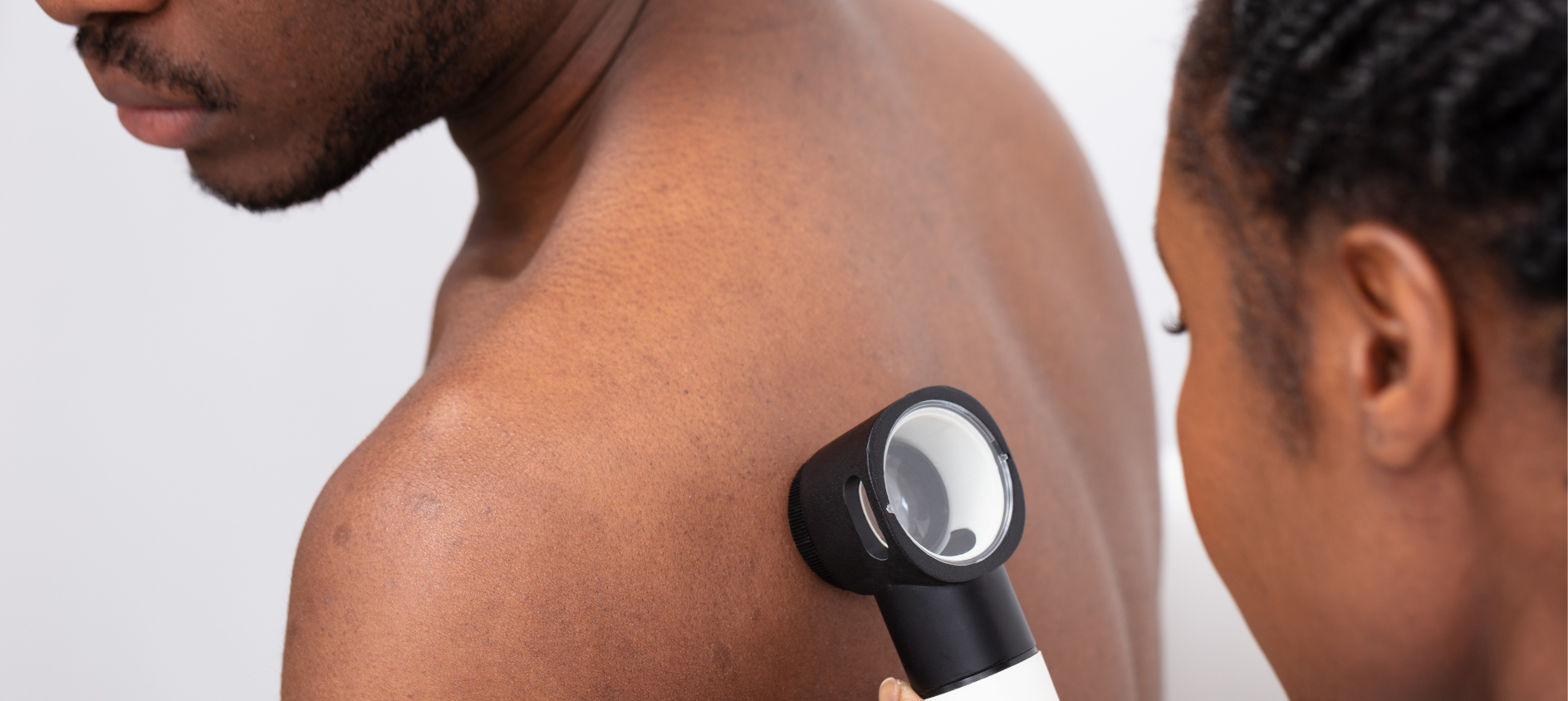
Skin cancer usually starts from spending too much time under the sun’s powerful ultraviolet (UV) rays. Without protecting your skin from these rays, they can damage your DNA – which controls how your cells grow and function. In some cases, the body can repair this damage. However, if your skin gets too much sun exposure over time, the cells lose the ability to fix themselves.
This exposure can lead to skin cancer. However, there are other reasons why people develop skin cancer. It’s not just about how much sun you get. Other everyday things can change your chances of getting skin cancer, including which types and the severity of it.
While there are key environmental factors that can impact your chances of getting skin cancer, it comes down to your body too. Skin cancer risk factors are different for men and women. From biological differences to lifestyle, these factors play a big role in whether someone will get skin cancer.
Men are twice as likely to develop non-melanoma skin cancer as women. While non-melanoma skin cancer is more frequently diagnosed in women under 40 – mainly because of indoor tanning habits and recreational sun exposure – the numbers flip dramatically with age. Because sun damage is cumulative, the older population faces an increase in non-melanoma skin cancer occurrence. By age 85, men are three times more likely to be diagnosed with non-melanoma skin cancer than women of the same age.
Understanding skin cancer risk factors by gender can provide more insight into the best prevention and treatment pathways.
What are the Differences in Biological Skin Cancer Risk Factors?
Biologically, men and women skin have distinct skin compositions that change how the body processes sun damage.
- Men’s skin is about 20-25% thicker than a women’s skin, due to hormones
- Men’s skin contains less fat under the skin (called subcutaneous)
- Women generally have higher levels of estrogen, which can boost the skin’s natural antioxidant defenses and immune responses
Because of these key differences, UV radiation affects the tissue differently for men and women. Men’s skin tends to be more vulnerable to deep, cumulative damage to the cells in the skin over time.
In fact, clinical data shows that men are twice as likely to develop squamous cell carcinoma, compared to women, which can be because of these differences. Squamous cell carcinoma, or SCC, starts to develop in the lower part of the epidermis.
Men typically have more SCC cases on the ears, top of the scalp, lips, and back of the neck. These are often attributed to shorter hair, and male-pattern baldness, which exposes these areas to UV rays more than in women.
Behavioral & Lifestyle Skin Cancer Risk Factors
Beyond biologically differences, key habits determine how sun damage accumulates over time. Historically, women under the age of 50 were diagnosed with non-melanoma skin cancers at higher rates due to frequent indoor tanning. As tanning beds have decreased in popularity due to health warnings and stricter regulations, older generations are still experiencing the delayed effects of that early exposure.
The risk of developing non-melanoma skin cancer skews higher for men, especially as they age. Exposure to the sun at work tends to be a primary factor. Men still represent the majority of the workforce in outdoor trades, like construction, agriculture, and roofing. Decades of working under the sun results in high amounts of UV exposure, which leads to dramatic spikes in non-melanoma skin cancer rates as men age.
Beyond sun exposure at work, there are key lifestyle differences between men and women that contribute to higher non-melanoma skin cancer rates in men. Public health data shows that men typically view sunscreen as necessary for obvious sun events, like a day at the beach or pool. However, men often skip sun protection during everyday outdoor activities like running, golfing, fishing, or even yard work. This means their skin remains unprotected against constant, low-grade UV damage.
In addition, proactive screening creates a gap in treatment outcomes. Women are more likely to perform at-home skin checks and schedule routine skin exams with their doctors – a proactive approach that results in more abnormalities being caught in their earliest stages. On the other hand, men are more likely to delay seeking medical care until a lesion becomes painful, bleeds, or changes significantly. This can limit treatment options and complicate overall care for the condition.
How Skin Cancer Risk Factors Impact Treatment Needs
The location and severity of the non-melanoma skin cancer lesion can impact the treatment options that are available to patients. Historically, surgical removal was the only standard treatment option for patients with non-melanoma skin cancer. Advanced medical innovations offer highly effective, non-invasive treatment options for patients.
A prime example of this technological shift is Superficial Radiotherapy (SRT) from Sensus Healthcare. Using a precise, low-energy beam of radiation SRT targets and disrupts the DNA of cancerous cells, causing the lesion to break down. Because the SRT delivers targeted, radiation that doesn’t go deeper than the skin, it leaves the surrounding healthy tissue unharmed.
With a 98.9% cure rate, SRT offers a treatment option for patients that are not ideal surgical candidates due to medical conditions or medications, like blood thinners. From patients who experience surgical anxiety to those that cannot disrupt their daily routines or quality of life, SRT offers an alternative that skips cutting and requires no recovery time.
In addition, SRT serves as a treatment option for lesions that appear in highly visible or structurally delicate areas like the face, ears, neck, or legs. With no cutting or stitches, there’s virtually no scarring – and no need for reconstructive plastic surgery after the procedure. Because of this, SRT is a highly preferred choice for cosmetically sensitive areas.
Every non-melanoma skin cancer diagnosis is unique. It’s important to discuss treatment options with your dermatologist to understand what the best route to care may be. Your doctor can build a treatment pathway that works best for you, taking into consideration your skin cancer case details, lifestyle, and care preferences.
Interested in learning more about SRT and if it’s the best treatment option for your non-melanoma skin cancer? Visit the Sensus Healthcare Location Finder to find a dermatologist near you.