
Receiving a non-melanoma skin cancer diagnosis can feel stressful. In fact, studies show that more than one in three patients find the diagnosis traumatic, with many more experiencing anxiety about what comes next.
For many, the fear of the treatment itself can feel just as overwhelming as the diagnosis. Traditional surgical options, such as Mohs surgery, requires physically cutting the lesion from the skin. This can lead to permanent scarring or the need for complex reconstructive surgery. When skin cancer lesions appear in highly visible places like the face, nose, or neck, the cosmetic impact can lead to immense anxiety for patients as well.
While Mohs surgery has long been considered the standard treatment for non-melanoma skin cancer, advancements in medical technology means that it’s not the only highly effective option available. Superficial Radiotherapy (SRT) offers a non-surgical alternative to Mohs surgery that boasts a 98.9% cure rate – all without a single scalpel, needle, or stitch.
Understanding Mohs Surgery: Why Patients Seek Alternatives
Mohs micrographic surgery has long been considered the standard of care for removing non-melanoma skin cancer lesions. This highly specialized technique removes skin layer by layer. Each layer gets examined by a microscope immediately after excision. This process continues until the surgeon finds a layer entirely free of cancer.
By focusing on this microscopic, layered approach, Mohs surgeons can precisely trace the cancer to its end while attempting to spare as much of the surrounding healthy tissue as possible. Because of the meticulous approach, the procedure typically has a cure rate of up to 99%.
Finding a non-surgical alternative to Mohs surgery serves important for several segments of the patient population. Older patients, for instance, may have underlying health concerns – such as heart conditions, diabetes, or the use of blood thinners – that can make any invasive surgical procedure more complex and risky. Because basal and squamous cell carcinomas frequently develop on highly visible areas like the face, nose, or ears, the tissue loss from surgical cutting may require reconstructive surgery to repair the wound. For these individuals, a non-invasive treatment option isn’t just a preference – it’s a medical necessity.
The Premier Alternative to Mohs Surgery: Superficial Radiotherapy (SRT)
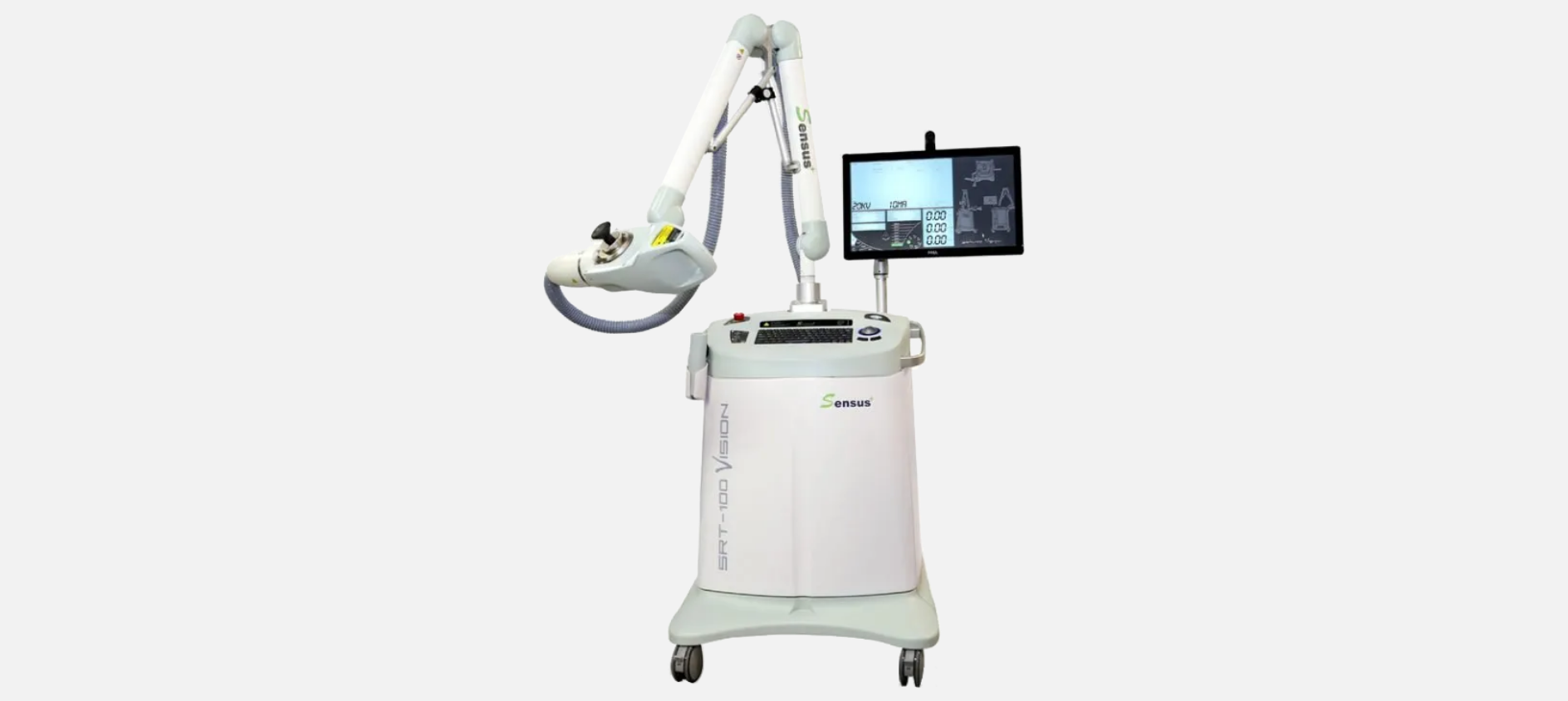
Superficial Radiotherapy (SRT) offers a non-invasive treatment option that targets skin cancer at the surface. Rather than cutting the skin, SRT delivers precise, low-energy X-Ray beams directly to the site of the skin cancer lesion. This targeted application disrupts and breaks down the DNA of the cancer cells, effectively destroying them while leaving the surrounding healthy skin tissue unharmed.
With SRT, patients will undergo a series of brief, completely pain-free sessions. Many patients compare the experience to getting routine X-rays at the dentist:
- The patient is prepped
- The machine is calibrated
- Treatment only takes a few minutes
Because there’s no surgical procedure, patients can walk out of the dermatology clinic and return to their favorite daily activities – with absolutely no downtime required for healing.
By completely bypassing scalpels, cutting, and local anesthesia, SRT stands as a powerful, highly effective alternative to Mohs surgery. From offering a stress-free treatment path to giving certain patients necessary options, SRT offers peace of mind without any lifestyle disruption.
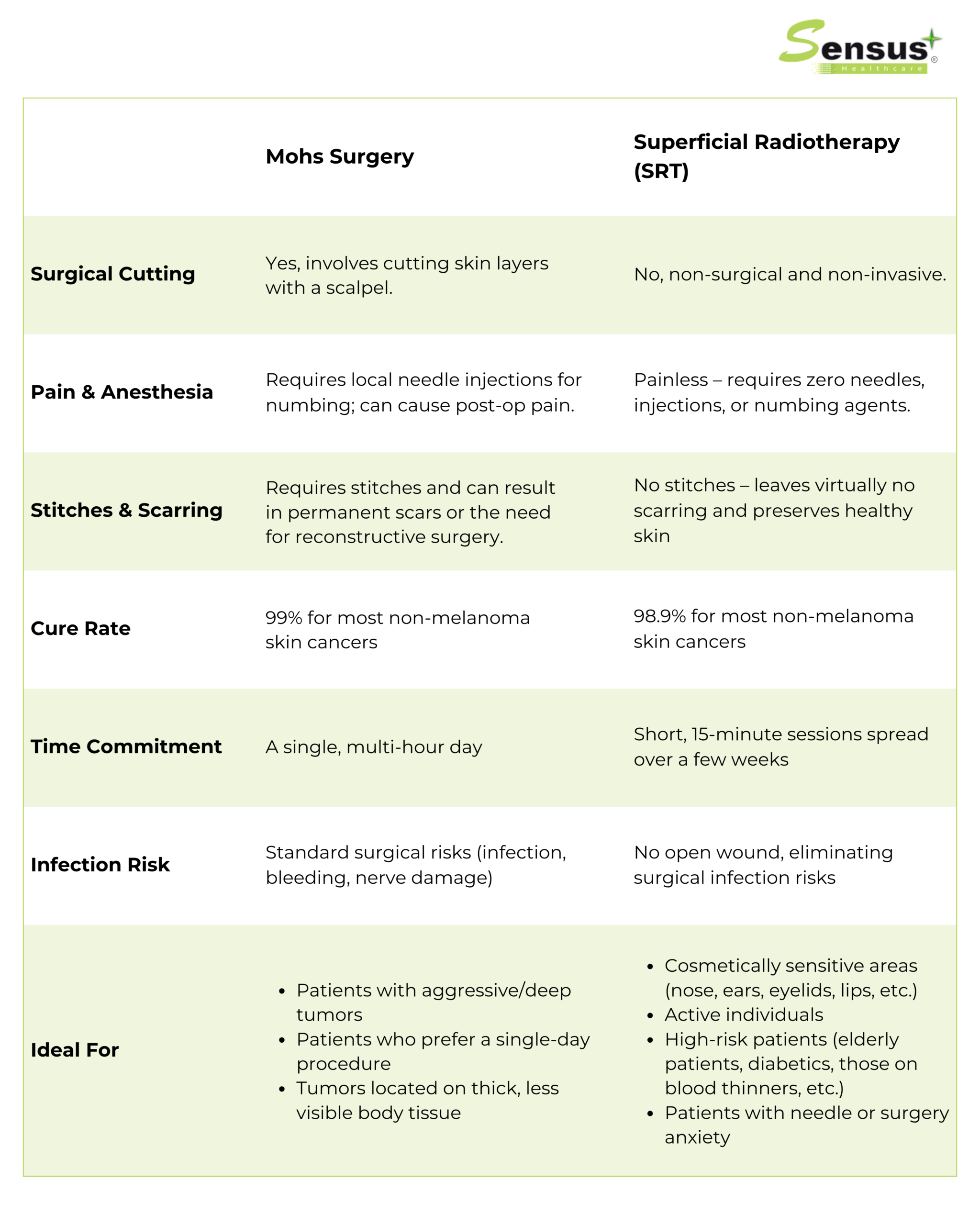
Comparing the Two: Why SRT is a Game-Changer for Patients
In today’s world of dermatology, there’s a place for both Mohs surgery and SRT. Both of them provide distinct benefits to patients. Together, they elevate the standard of care and provide options to patients.
Is SRT the Right Alternative to Mohs Surgery For You?
Determining whether SRT is an alternative to Mohs surgery starts with a conversation with the dermatologist and medical team. They can advise on what options are available, and how they align with your unique health history.
Generally, SRT is considered an ideal option for patients who meet the following criteria:
- Non-melanoma skin cancer diagnosis. SRT is FDA-cleared and clinically proven specifically for basal cell carcinoma and squamous cell carcinoma.
- The lesion is in a highly visible area. If the skin cancer lesion is located on the face, nose, eyelids, lips, ears, or neck, SRT offers a non-invasive option to destroy the cancer cells while preventing surgical scarring.
- Surgical risks are a concern. Underlying health conditions, like diabetes, or certain medications, like blood thinners, may make SRT the ideal choice.
- No time for lifestyle downtime. Whether it’s your job or hobbies, SRT offers a treatment pathway with zero recovery or downtime.
Bringing up SRT in treatment discussions becomes important to understand your options and what the best pathway may be to treat non-melanoma skin cancer.
Ready to Explore an Alternative to Mohs Surgery?
A skin cancer diagnosis can be overwhelming and troubling, but the path to becoming cancer-free doesn’t have to mean permanent scars, surgical intervention, or long recovery times. Medical advancements have provided options to patients, ensuring that there are highly effective, gentle options.
To understand which treatment option may be best for you, it starts with a conversation about non-melanoma skin cancer and what treatment pathway makes sense based on the specific case and medical history. In doing so, it can advance treatment and ensure the best standard of care.
Interested in learning more about alternatives to Mohs surgery for non-melanoma skin cancer? Check out the Sensus Healthcare Location Finder to find a dermatologist near you.