
One in five Americans will be diagnosed with skin cancer by their 70th birthday. Historically, treating skin cancer required a scalpel and a procedure called Mohs surgery. Mohs surgery, named for the dermatologist that founded the procedure, involves cutting out the skin cancer lesion – which leads to scarring and a lengthy recovery time.
Modern technology has changed the rules.
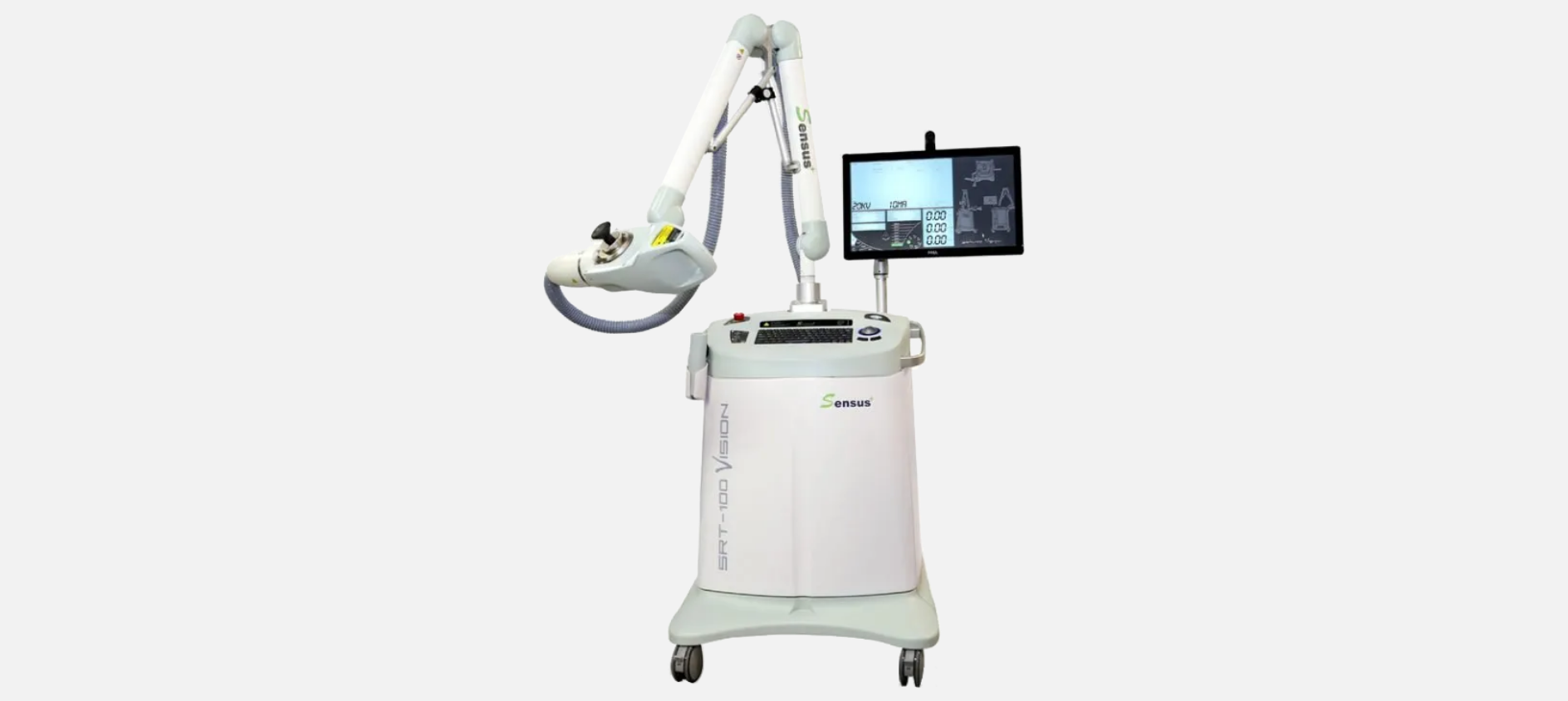
Superficial Radiotherapy (SRT) provides an alternative treatment option to treat non-melanoma skin cancer. Cleared by the FDA as a non-surgical alternative for treating non-melanoma skin cancers, SRT offers patients a treatment option that doesn’t require them to undergo surgery to remove the skin cancer lesion.
For some patients, this non-invasive approach becomes critical, depending on other health factors. When non-melanoma skin cancer appears on certain parts of the body – such as the nose, leg, or ears – it becomes challenging to remove via surgery. In addition, certain health conditions may make it challenging to have surgery, or even recover from surgery.
Clinical studies show that SRT has similar cure rates to Mohs surgery, with a 98.9% cure rate. Together, SRT and Mohs surgery offer patients the best options to treat non-melanoma skin cancer.
How does Superficial Radiotherapy (SRT) work?
Unlike traditional radiation therapies used to treat cancers in the internal organs, Superficial Radiotherapy (SRT) focuses on penetrates just the surface of the skin. It uses a low-energy X-ray radiation that focuses on the outermost layers of the skin – exactly where non-melanoma skin cancer grows.
When treating a basal cell or squamous cell carcinoma, the SRT applicator will be placed directly over the lesion. The system will them deliver a painless dose of superficial X-ray energy, concentrated to exactly where the lesion is located on the skin. It acts with surgical precision – deep enough to get to the root of skin cancer, but shallow enough to preserve the healthy skin around the lesion.
The low-energy radiation delivered by the SRT targets and disrupts the DNA sequence within the cancer cells. As a result, the cancer cells lose their ability to replicate. The tumor can no longer grow. Over the course of the SRT treatment, these damaged cells break down and are cleared away by the body’s immune system.
Most importantly, SRT focuses the radiation on the cancerous cells. The surrounding healthy cells and skin can heal via the immune system in between sessions, which results in a clean healing process.
The Patient Experience: What to Expect During Treatment
More than one in three patients diagnosed with non-melanoma skin cancer note that the diagnosis feels traumatic, according to recent research. Beyond the diagnosis, patients experience mental anguish over what’s next for treatment and the future of their skin health.
Understanding the treatment protocol and what that experience may look like can help eliminate some of the anxiety associated with the diagnosis and the treatment path. For patients undergoing SRT treatment for their non-melanoma skin cancer, the treatment path looks different than what typically happens when undergoing surgery.
SRT treatments happen right in the dermatology office. Sessions are fast – usually last just a few minutes, with set up taking more time than the treatment itself. Some patients have compared getting SRT to an X-ray at the dentist – from what it takes to set up to how it feels.
While there’s no recovery time for SRT, patients do have to undergo a series of treatment. Their specific case of non-melanoma skin cancer will determine how many sessions are required to treat their skin cancer.
Because there’s no cutting involved, patients can walk right out of the clinic and return to their daily activities.
Why Patients and Providers Choose Superficial Radiotherapy (SRT)
Every medical discipline has experienced what the dermatology practice is experiencing today. True innovation solves a clinical problem and gives patients alternative treatment options. But, in doing so, it helps to elevate the standard of care.
Superficial Radiotherapy (SRT) represents this shift in dermatology and oncology for patients with non-melanoma skin cancer. With a technology-first, non-invasive alternative to traditional surgical removal, SRT offers patient comfort and clinical efficiency.
For patients, this means that they can choose a treatment pathway that aligns with what they need medically and for their daily quality of life. It offers a non-invasive treatment option that results in:
- No scarring. Without cutting and sutures, patients can avoid scarring or reconstructive surgery or procedures.
- Painless, fear-free experience. Because it’s non-invasive, SRT offers an option that eliminates the anxiety of needle, surgery, or pain.
- Uninterrupted life. In between and after treatment sessions, patients can continue their normal daily activities – whether that means going back to work, exercising, or traveling.
For providers, integrating SRT into their practice isn’t about replacing traditional surgery treatment options. It provides a comprehensive, patient-centered ecosystem that optimizes both clinical outcomes and patient dynamics.
- Customized treatment plans. Every patient is unique. SRT gives providers the ability to tailor their approach to the individual, whether they have healing complications or face surgical risks.
- Seamless operational integration. SRT devices are easy to move and feature a low profile, making it easy to set up and use for treatment.
- Reliable and consistent reimbursement. In today’s medical landscape, clinical innovation must be matched with viability. Sensus Healthcare’s SRT is backed by established, dedicated billing codes – so practices receive consistent, reliable reimbursement.
Empowering Your Choices for Skin Cancer Care
Navigating a non-melanoma skin cancer diagnosis can feel overwhelming. From the initial biopsy to understanding your potential treatment options, it can be scary to understand what the future may hold. However, managing your health doesn’t mean compromising your lifestyle.
Partnering closely with your dermatologist means you can identify a personalized treatment path forward that aligns with your specific needs, medical history, and personal comfort.
Superficial Radiotherapy (SRT) empower patients with a true choice in their journey to treat non-melanoma skin cancer. The result? The ability to choose a gold-standard of care that aligns with your current life, routines, and the skin you’re in.
Facing a non-melanoma skin cancer diagnosis? Find a dermatologist near you that can discuss SRT as a treatment option.